How to Oil Cleanse: Step-by-Step Method and Common Mistakes
September 04, 2026
Learning how to oil cleanse correctly begins with a simple method: apply a well-formulated cleansing oil to dry skin, massage gently, and remove it completely with a soft cloth and comfortably warm water.
This step-by-step oil cleansing guide explains how long to leave cleansing oil on your face, whether you should wash it off, when to double cleanse, and the common mistakes that can leave skin feeling coated, irritated, or congested.
The method is based on a straightforward principle: oil dissolves oil. A well-formulated cleansing oil mingles with the oils already present on the skin and helps soften makeup, sunscreen, excess sebum, and oil-soluble daily residue so they can be gently lifted away.
Oil cleansing can be beautiful for dry, mature, sensitive, combination, oily-feeling, or blemish-prone skin. The results depend upon the oil blend, the amount used, how completely it is removed, the frequency of cleansing, and the individual complexion.
What Is Oil Cleansing?
Oil cleansing replaces—or begins—the evening cleanse with a botanical oil formula rather than a conventional foaming cleanser.
Makeup, sunscreen, sebum, and many components of skincare are oil-soluble. Massaging a cleansing oil over dry skin helps loosen these materials without relying upon strong foam or aggressive scrubbing.
The oil and everything it has dissolved are then removed with a soft cloth and comfortably warm water. When needed, a second cleanser can follow to remove any remaining oil or water-soluble residue.
Oil cleansing is especially well suited to the evening because this is when makeup, sunscreen, skincare, excess surface oil, and environmental residue have accumulated throughout the day.
How Do Oil Cleansers Remove Makeup Without Foaming?
The skin naturally produces sebum, an oily substance that helps lubricate and protect its surface. Makeup, sunscreen, airborne particles, and other products can mingle with that sebum throughout the day.
Because botanical oils are lipophilic—meaning they readily mingle with other oils—a cleansing oil can dissolve and loosen oil-soluble residue so it can be removed more easily.
The massage also gives the cleansing oil time to move across the contours of the face and around follicular openings. This can help soften stubborn makeup, surface sebum, and compacted residue without the friction of a scrub.
Oil cleansing does not need to produce foam to cleanse effectively. Foam is a sensory characteristic, not proof that the skin is clean.
Do You Wash Off Cleansing Oil?
Yes. A cleansing oil should be removed completely after it has dissolved makeup, sunscreen, sebum, and daily residue.
A cleansing oil is different from a leave-on facial oil. Once it has mingled with the substances being removed from the skin, it should not remain on the face as the final moisturizing step.
Leaving cleansing oil and loosened residue behind may make the complexion feel coated, interfere with the products applied afterward, or contribute to congestion for some people.
A surfactant-free cleansing oil is generally removed with a fresh, soft cloth and comfortably warm water. When a noticeable film remains—or when removing heavier makeup or water-resistant sunscreen—follow with a gentle second cleanser.
What Oil Cleansing Does Not Mean
It Does Not Mean Every Oil Works for Every Person
Botanical oils differ in fatty-acid profile, stability, weight, absorption, and skin feel. A heavy single oil may feel beautiful on one complexion and unsuitable on another.
A balanced cleansing-oil formula is designed not only to dissolve residue, but also to provide adequate glide, remain stable, and be removable without excessive rubbing.
It Does Not Guarantee That an Oil Cannot Contribute to Congestion
Natural does not mean universally compatible. Individual response, product composition, cleansing technique, removal, cloth hygiene, frequency, and the rest of the routine all matter.
If a particular oil-cleansing routine repeatedly creates congestion, irritation, or discomfort, adjust the method rather than forcing the skin to continue.
It Does Not Require a “Purging” Period
New breakouts should not automatically be interpreted as toxins leaving the skin or as proof that the method is working.
Congestion after beginning oil cleansing can result from incomplete removal, using too much oil, cleansing too frequently, massaging for too long, using unclean cloths, skipping a needed second cleanse, or simply using a formula that does not agree with the individual complexion.
A few temporary changes can occur whenever a routine is changed, but persistent or worsening breakouts are a reason to reassess the method—not something that must be endured indefinitely.
Benefits of Oil Cleansing
Thorough Makeup and Sunscreen Removal
Oil cleansing is particularly effective for dissolving foundation, mascara, long-wearing makeup, water-resistant sunscreen, and layered skincare.
Rather than repeatedly rubbing the skin with cotton pads or relying upon a strong foaming cleanser, the oil can be massaged gently over the entire face before removal.
A More Comfortable Cleanse
Some cleansers—particularly strongly foaming formulas or products used too frequently—can leave the skin feeling tight, dry, or depleted.
A botanical cleansing oil cushions the skin during massage and can leave the complexion feeling soft and conditioned after it has been removed.
Support for the Moisture Barrier
Oil cleansing can help preserve the comfortable feel of the skin by avoiding unnecessary stripping of its surface lipids.
This can be especially helpful when the complexion already feels dry, reactive, mature, weather-stressed, or compromised by over-exfoliation.
A More Balanced-Feeling Complexion
Oily-feeling skin does not necessarily benefit from being scrubbed or dried as aggressively as possible.
Some people find that replacing an overly stripping cleanser with a thorough but gentler oil cleanse helps the complexion feel calmer and less reactive over time. Others may prefer oil cleansing only several evenings per week rather than daily.
A Facial-Massage Ritual
The slip of a cleansing oil allows the fingertips to move across the skin without pulling. The massage can turn an ordinary cleansing step into a slow, grounding self-care ritual.
More pressure is not more effective. Gentle, deliberate movement is enough.
Choosing the Right Cleansing Oil
A cleansing oil should provide enough slip to prevent tugging, dissolve oil-soluble residue effectively, and be removable without requiring harsh friction.
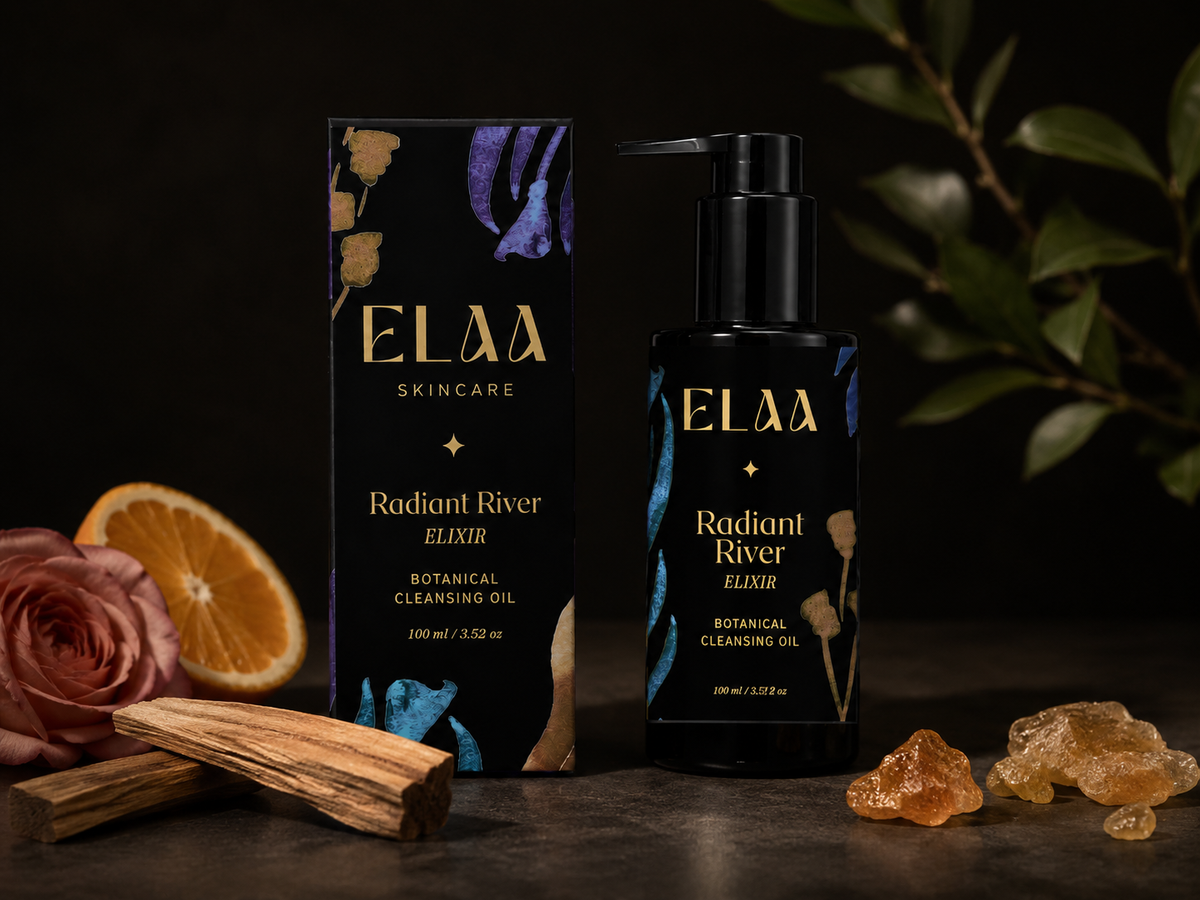
Radiant River Botanical Cleansing Oil is Elaa’s surfactant-free oil cleanser for deep, nourishing evening cleansing.
Its formula balances lightweight, linoleic-rich seed oils with silky emollients and concentrated botanical extracts. Meadowfoam and olive-derived squalane provide glide and help dissolve makeup and oil-soluble residue, while strawberry, Kalahari watermelon, amla, rosehip, red raspberry, and sea buckthorn contribute antioxidant-rich botanical conditioning.
Radiant River is essential-oil-free and contains no added fragrance. Its natural aroma comes from the whole botanicals within the composition.
With proper use, Radiant River can help:
- Dissolve makeup, sunscreen, and oil-soluble residue
- Lift excess surface oil and accumulated daily impurities
- Cleanse without foaming agents
- Leave the skin feeling soft, conditioned, and comfortable
- Support the skin’s natural moisture barrier
- Reduce the tight or depleted feeling associated with over-cleansing
- Support smoother, more resilient-looking skin
- Create a slow and sensorial facial-massage ritual
Who Can Oil Cleanse?
Oil cleansing may be incorporated into routines for:
- Dry or moisture-depleted skin
- Mature-looking skin
- Combination skin
- Oily-feeling skin
- Sensitive or reactive-looking skin
- Blemish-prone or congestion-prone complexions
- Skin exposed to daily makeup or sunscreen
- Anyone who prefers a slow, non-foaming evening cleanse
No cleanser is ideal for every person. Begin gradually and observe how the skin feels during cleansing, immediately afterward, and over the following days.
Oil Cleansing and Double Cleansing
Double cleansing is a two-step method that begins with an oil cleanser and follows with a second rinse-away cleanser.
The first step dissolves makeup, sunscreen, sebum, and other oil-soluble residue. The second step removes any remaining cleansing oil and water-soluble daily buildup.
A second cleanse may be especially helpful when:
- Wearing heavier or long-wearing makeup
- Removing water-resistant sunscreen
- Layering several skincare products
- The skin still feels coated after oil removal
- Congestion appears after beginning oil cleansing
- A very thorough evening cleanse is desired
Golden Sunrise 2 in 1 Enzyme Cleansing Cream is the ideal Elaa second cleanse after Radiant River.
Golden Sunrise combines jojoba and other emollient ingredients with a creamy rinse-away system, aloe vera, coconut milk, glycerin, pineapple, papaya, herbs, and botanicals. It helps remove remaining oil and daily residue while leaving the skin feeling soft and refreshed.
For everyday cleansing and lighter makeup, Golden Sunrise may also be used on its own.
How Often Should You Oil Cleanse?
Oil cleansing is generally best performed in the evening and no more than once per day.
Some people enjoy it every evening. Others find that every other evening or two to three times per week creates the best balance for their skin.
A gradual introduction can make it easier to observe the complexion:
- Begin one or two evenings per week.
- Remove the oil thoroughly every time.
- Observe the skin for dryness, residue, congestion, or irritation.
- Increase frequency only when the skin remains comfortable.
If daily oil cleansing leaves the skin feeling coated, dry, unusually oily, irritated, or congested, reduce the frequency and review the removal technique.
Step-by-Step Oil Cleansing Method
1. Wash and Dry Your Hands
Begin with clean hands. Dry them completely before dispensing the cleansing oil.
2. Begin with a Dry Face
Apply a surfactant-free cleansing oil to dry skin.
Water can prevent the oil from mingling as directly with makeup, sunscreen, sebum, and other oil-soluble residue. Keep both the face and hands dry during the initial application.
Optional: Before beginning, press a comfortably warm, damp cloth gently against the face for several seconds. Then pat the skin completely dry before applying the oil.
Never use a very hot cloth. Excessive heat can leave the skin feeling dry or irritated.
3. Apply Enough Oil for Comfortable Slip
Dispense a generous amount of Radiant River into the palm.
Use enough to cover the face, neck, and any other area being cleansed without dragging or pulling the skin. Avoid flooding the complexion with far more product than is needed, as excess oil can make removal unnecessarily difficult.
4. Massage Gently
Spread the cleansing oil over the face using the fingertips. Massage with slow, light circular movements.
Give particular attention to areas where makeup, sunscreen, or excess sebum tends to accumulate, such as:
- Around the nose
- Across the forehead
- Along the jawline
- Near the hairline
- Over areas of long-wearing makeup
Keep the eyes closed while dissolving eye makeup and avoid getting the product directly into the eyes.
For a first oil cleanse, approximately 60 to 90 seconds of massage is enough. Once the skin is comfortable with the method, the massage can be extended when desired.
Longer is not always better. Repeatedly rubbing for ten minutes or more can irritate sensitive or congestion-prone skin.
5. How Long Should You Leave Cleansing Oil on Your Face?
A cleansing oil does not need to remain on the face for a long period in order to work.
After massaging, allow the oil to rest briefly so it can continue softening makeup and residue. Those new to oil cleansing can begin with approximately 60 to 90 seconds.
When the complexion responds comfortably, the resting period may be extended to several minutes. There is generally no need to leave cleansing oil on the face for ten, twenty, or thirty minutes.
Cleansing oil should not be left on overnight. It has mixed with makeup, sunscreen, sebum, and daily residue and should be removed before the rest of the skincare ritual.
Very dry skin may absorb some of the oil during the massage or resting period. Add a small amount only when needed to maintain comfortable slip.
6. Perform the First Removal
When removing heavier makeup, water-resistant sunscreen, or several layers of product, first wipe away the majority of the cleansing oil with a clean, dry, soft cloth before introducing water.
This disposable cloth option can be helpful when you prefer not to place oil-heavy cloths in the laundry.
For a lighter cleanse, mist the skin with Moonlight Mist or lightly dampen it with warm water, then wipe gently with a soft cloth.
7. Remove the Remaining Oil with Warm Water
Take a second fresh cloth—different from the cloth used for the first removal—and wet it with comfortably warm water.
Press the cloth gently against the skin, then wipe thoroughly without scrubbing. Rinse the cloth, squeeze out the excess water, and repeat until the cleansing oil and loosened residue have been removed.
Pay attention to areas where oil can remain, including:
- Around the nostrils
- Along the hairline
- Between the eyebrows
- Around the jaw and ears
- Within facial creases
Gently pat the face dry.
8. Double Cleanse When Needed
If makeup, sunscreen, substantial skincare residue, or a noticeable oily film remains, follow with Golden Sunrise Cleansing Cream.
Dispense several pumps into the palm. Add a small amount of water and massage the hands together to distribute the cream.
Massage gently over the face using slow circular movements. Rinse thoroughly with comfortably warm water and pat dry.
Double cleansing is not mandatory every evening. Use it when the first cleanse has not removed everything completely.
9. Finish the Cleansing Ritual
Mist the freshly cleansed skin with Moonlight Mist or another Elaa botanical toner.
Leave the final mist on the skin, then continue with the appropriate serum, facial oil, balm, or moisturizer while the complexion remains lightly damp.
Choosing a Cleansing Cloth
The cloth should be soft enough to remove the oil without scraping or aggressively exfoliating the skin.
Options include:
- Disposable facial cloths
- Organic cotton face cloths
- Muslin cleansing cloths with a little more texture
- Soft muslin cloths
Use a fresh cloth for each cleanse. Oil, makeup, and moisture can accumulate in reusable cloths, so they should be washed thoroughly and allowed to dry completely between uses.
Textured muslin provides mild physical exfoliation. Use very light pressure and choose a smoother cloth when the skin is reactive, over-exfoliated, or barrier-compromised.
Optional Raw Honey Cleansing Step
Raw honey is not required for oil cleansing, but some people enjoy it as an occasional final cleansing step.
After the cleansing oil has been thoroughly removed, apply a small amount of raw honey to lightly damp skin. Massage gently for a short time, then rinse completely with comfortably warm water.
Raw honey can leave the skin feeling soft and conditioned, but it may not suit everyone. Patch test first and do not use honey topically if you have a known allergy or sensitivity to honey or other bee-derived ingredients.
Two options include:
Common Oil-Cleansing Mistakes
Applying Cleansing Oil to Wet Skin
Apply a surfactant-free oil cleanser to dry skin with dry hands. Introducing water before the oil has had time to mingle with makeup, sunscreen, and sebum can reduce the effectiveness of the initial cleanse.
Using Too Little Oil
Too little cleansing oil creates friction. The fingertips should glide easily rather than tugging the skin.
Using Far More Oil Than Needed
An excessive amount can make the cleanser unnecessarily difficult to remove. Use enough for complete coverage and comfortable slip, but not so much that the face is dripping.
Massaging Too Aggressively
Oil provides slip, but that does not mean the face should be kneaded, pinched, or scrubbed. Use light pressure and slow movements.
Massaging or Leaving the Oil on Too Long
A longer massage or resting period is not automatically a deeper cleanse. Extended rubbing or leaving cleanser on the skin for a prolonged period can leave sensitive skin red or uncomfortable and may aggravate active blemishes.
Using Hot Water
Warm water helps keep the oils fluid during removal. Very hot water can leave the complexion feeling stripped, tight, or irritated.
Leaving Cleansing Oil Behind
Radiant River is a cleanser, not a leave-on facial oil. Remove it thoroughly before moving on to toner, serum, or moisturizer.
Using the Same Cloth Repeatedly Without Washing It
Oil, makeup, and moisture collect in cleansing cloths. Reusing a cloth without thoroughly laundering and drying it can reintroduce residue to the skin.
Scrubbing with the Cloth
The cloth is intended to lift away the loosened oil and residue—not sand the surface of the skin.
Skipping a Needed Second Cleanse
Heavy makeup, water-resistant sunscreen, or multiple layers of product may not be completely removed by one oil cleanse. Follow with Golden Sunrise when the skin still feels coated.
Double Cleansing When It Is Not Needed
More cleansing is not always better. When the oil has been removed completely and the skin feels clean and comfortable, an additional cleanse may be unnecessary.
Oil Cleansing Too Frequently
Do not repeat the method several times per day. Evening oil cleansing once daily is the maximum most skin needs, and many people prefer a less frequent rhythm.
Ignoring Persistent Congestion
Do not assume that ongoing breakouts are a required detoxification phase. Review the oil, amount, massage time, removal, cloth hygiene, and frequency. Reduce or stop the method if the skin continues to worsen.
Troubleshooting Your Oil-Cleansing Ritual
If the Skin Still Feels Oily
- Use slightly less cleansing oil.
- Perform a dry-cloth removal before using water.
- Use a second fresh warm cloth to remove the remaining film.
- Pay closer attention to the hairline, nostrils, and jaw.
- Follow with Golden Sunrise when needed.
If the Skin Feels Dry or Tight
- Make sure the water is warm rather than hot.
- Use less pressure with the cloth.
- Shorten the massage.
- Reduce cleansing frequency.
- Avoid combining the cleanse with a scrub or strong exfoliant.
- Mist and moisturize promptly after cleansing.
If Congestion or Breakouts Appear
- Confirm that both hands and face are dry during application.
- Remove the cleansing oil completely.
- Use a freshly laundered cloth each time.
- Shorten the massage and resting period.
- Double cleanse after makeup or sunscreen.
- Reduce oil cleansing to two or three evenings per week.
- Consider whether another newly introduced product may be involved.
- Pause the method if congestion continues to increase.
If the Skin Becomes Red or Irritated
- Stop using hot water.
- Switch to a softer cloth.
- Use lighter pressure.
- Reduce the frequency and massage time.
- Avoid oil cleansing over broken or actively irritated skin.
- Pause the product if persistent irritation develops.
If Eye Makeup Remains
Apply a small additional amount of oil to closed eyes and allow it time to soften the makeup. Wipe gently rather than rubbing back and forth.
Very long-wearing or waterproof eye makeup may require a second careful pass. Avoid getting the oil directly into the eyes.
Frequently Asked Questions
Does Oil Cleansing Clog Pores?
Oil cleansing does not automatically clog pores, but no formula or method is universally compatible.
The oil blend, amount, massage time, removal, cleansing frequency, cloth hygiene, and the rest of the skincare routine can all affect the result.
Can Oily Skin Use a Cleansing Oil?
Yes. Oily-feeling skin can benefit from an oil cleanser because sebum, sunscreen, and makeup are oil-soluble.
The cleanser still needs to be removed thoroughly. Begin gradually and double cleanse when the skin feels coated or congestion-prone.
Can Acne-Prone Skin Oil Cleanse?
Many acne-prone complexions use oil cleansing successfully. Choose a thoughtfully formulated product, avoid aggressive massage over active blemishes, use a clean cloth, and remove the cleanser completely.
Persistent worsening is a reason to adjust or pause the method rather than assume the skin must purge.
Is Oil Cleansing Good for Dry Skin?
Oil cleansing can be especially comfortable for dry skin because it avoids the tight after-feel associated with some strongly foaming cleansers.
It is still important to remove the cleansing oil and follow with water-based hydration and an appropriate moisturizer.
Do You Need to Double Cleanse After Oil Cleansing?
Not every evening. Double cleanse when wearing heavier makeup, water-resistant sunscreen, several layers of skincare, or whenever the first cleanse leaves a noticeable film.
Do You Use Oil Cleanser First?
Yes. When double cleansing, the oil cleanser is generally the first step.
Apply it to dry skin, remove it completely, and then follow with a gentle rinse-away cleanser when needed.
Can I Use a Regular Facial Oil as a Cleansing Oil?
A facial oil may dissolve makeup, but it may not have the ideal stability, slip, botanical balance, or removal characteristics for cleansing.
A dedicated cleansing-oil formula is designed specifically for this part of the routine.
Should I Steam My Face Before or After Oil Cleansing?
Steam is not required. A brief warm-cloth press can feel pleasant, but prolonged steam and excessive heat may irritate sensitive or barrier-compromised skin.
How Long Should I Massage Cleansing Oil?
Approximately 60 to 90 seconds is enough for most daily cleansing. A slightly longer massage can be enjoyed when the skin remains comfortable, but extended rubbing is not necessary for an effective cleanse.
How Long Should I Leave Cleansing Oil on My Face?
A brief resting period of approximately 60 to 90 seconds is enough when beginning.
Once the skin is comfortable with the method, the oil may remain for several minutes. It does not need to be left on for a prolonged period, and it should not be left on overnight.
Can I Oil Cleanse in the Morning?
Most people benefit most from oil cleansing in the evening, when makeup, sunscreen, sebum, and daily residue need to be removed.
A lighter morning cleanse—or simply warm water when appropriate—may be sufficient unless there is a particular reason to use an oil cleanser.
Why Does My Oil Cleanser Leave a Film?
The most common reasons are using too much oil, not performing a thorough first removal, using only one damp-cloth pass, or skipping a needed second cleanse.
Use a little less oil, remove the majority with a clean dry cloth, follow with a second fresh warm cloth, and use Golden Sunrise when a film remains.
What Happens If You Oil Cleanse Too Much?
Oil cleansing too often or for too long can leave some complexions dry, irritated, unusually oily, or congested.
Do not oil cleanse more than once per day. Reduce the ritual to every other evening or two to three times per week if the skin begins feeling overworked.
Is Tight Skin a Sign That It Is Deeply Clean?
No. Tightness often indicates that the skin has been over-cleansed, exposed to water that is too hot, or rubbed too firmly.
Freshly cleansed skin should feel clean and comfortable rather than squeaky or depleted.
A Better Cleansing Ritual Begins with Technique
Oil cleansing can provide a thorough, luxurious cleanse while respecting the skin’s natural moisture barrier.
The best results come from the details: begin with dry skin, use enough oil for comfortable slip, massage gently, allow only a brief resting period, remove the cleanser completely, keep cloths fresh, and double cleanse only when needed.
Allow the skin to guide the frequency. A successful ritual should leave the complexion feeling clean, soft, calm, and prepared for the hydration and nourishment that follow.
Explore Radiant River Botanical Cleansing Oil.
Explore Golden Sunrise 2 in 1 Enzyme Cleansing Cream.
Some links in this article are affiliate links. Elaa may receive a small commission when a purchase is made through one of these links, at no additional cost to you. Product recommendations are selected independently.