How to Repair a Damaged Skin Barrier
September 02, 2026
If your skin suddenly feels tight, rough, flaky, unusually reactive, or uncomfortable when you apply products that once felt gentle, your moisture barrier may be compromised.
The skin barrier has become a popular skincare topic in recent years, and for good reason. It is essential to healthy, resilient, beautifully functioning skin. When the barrier is strong, the complexion can retain moisture, tolerate products more comfortably, and protect itself from everyday environmental stress. When it is disrupted, dryness, redness, sensitivity, breakouts, flaking, and excess surface oil can all become more noticeable.
Repairing a damaged skin barrier begins by removing the habits and products that are continuing to stress it. The next step is to rebuild a simple ritual around gentle cleansing, water-based hydration, nourishing lipids, moisture-binding ingredients, and time.
Understanding the Skin Barrier
What Is the Skin Barrier?
The skin barrier, also known as the stratum corneum, is the outermost layer of the epidermis.
It is often compared to a brick wall. Flattened skin cells called corneocytes form the “bricks,” while a surrounding mixture of lipids—including ceramides, cholesterol, and fatty acids—forms the “mortar” that helps hold them together.
This thin but highly organized layer serves several important functions:
- Helping reduce excessive water loss from the skin
- Keeping the complexion soft, flexible, and hydrated
- Creating a protective boundary between the body and the outside environment
- Reducing the penetration of irritants, allergens, and pollutants
- Supporting the skin’s natural microbiome
- Helping the skin recover from ordinary environmental and surface stress
When the structure of this outer layer is disrupted, water escapes more easily through a process called transepidermal water loss. At the same time, the skin may become more vulnerable to ingredients, temperatures, friction, and environmental exposures that previously caused no discomfort.
The Role of the Skin Barrier in Overall Skin Health
A healthy barrier does much more than prevent dryness. It helps create the conditions in which the skin can function normally.
When the barrier is intact, the complexion generally feels comfortable, supple, and resilient. When it is compromised, even a carefully formulated serum or moisturizer may sting because the skin’s protective surface is no longer functioning as effectively.
Barrier health also affects how the complexion appears. A disrupted barrier may contribute to visible dullness, roughness, flaking, uneven texture, redness, and fine dehydration lines.
The Structure of the Skin
The Three Main Layers
The skin has three primary layers:
- The epidermis: The outer layer of the skin. The stratum corneum sits at its surface and forms the primary moisture barrier.
- The dermis: The deeper layer containing connective tissue, blood vessels, nerves, sweat glands, sebaceous glands, and hair follicles.
- The hypodermis: The deeper cushioning layer composed largely of fat and connective tissue.
Although the moisture barrier is extremely thin, its condition affects the comfort and visible appearance of the entire complexion.
The Essential Components of the Barrier
The barrier depends upon a balanced combination of skin cells, natural moisturizing factors, lipids, and water.
Ceramides are among the most important lipids within the stratum corneum. They help fill the spaces between surface cells, limit excessive moisture loss, and maintain a smooth, cohesive barrier.
Cholesterol and fatty acids work alongside ceramides to support flexibility and structural integrity.
Natural moisturizing factors are water-binding substances naturally present within the skin. They help the stratum corneum hold water and remain soft rather than becoming brittle, rough, or flaky.
Sebum also contributes protective oils to the surface. Excessively removing these oils can leave the complexion feeling depleted, even when the skin naturally tends to be oily.
Signs of a Compromised Skin Barrier
A weakened barrier can present differently from one person to another. Common signs include:
- Tightness, especially after cleansing
- Dryness, flaking, or visibly scaly areas
- Rough or uneven-feeling texture
- Visible redness or increased reactivity
- Stinging when familiar skincare products are applied
- Skin that feels hot, tender, or easily irritated
- A shiny surface that still feels dry underneath
- Sudden sensitivity to water, temperature, touch, or fragrance
- Fine lines that appear more noticeable when the skin is dehydrated
- Increased congestion or breakouts alongside dryness
- Difficulty tolerating exfoliants or active serums
- Skin that no longer seems to recover between treatments
Several skin concerns can create similar symptoms. Persistent itching, pain, swelling, cracking, weeping, bleeding, crusting, or rapidly worsening redness should be evaluated by an appropriately qualified practitioner.
Common Causes of Skin Barrier Damage
Over-Cleansing
Cleansing too frequently, repeatedly washing until the skin feels “squeaky,” or using a cleanser that leaves the complexion tight can remove more surface lipids than the skin can comfortably replace.
Strongly foaming cleansers are common triggers, especially when they are used several times per day or combined with hot water and abrasive cloths.
Not every surfactant or rinse-away cleanser affects every person in the same way. The finished formula, concentration, cleansing frequency, water temperature, and individual skin all matter. The most useful question is how the complexion actually feels after cleansing.
Excessive or Harsh Exfoliation
Acids, enzymes, scrubs, brushes, exfoliating cloths, peels, and polishing powders all remove or loosen material from the skin’s surface.
Used thoughtfully, exfoliation can support smoother, more luminous-looking skin. Used too often—or layered together—it can remove surface cells faster than the barrier can rebuild itself.
Signs of over-exfoliation include unusual shine, burning, tightness, flaking, persistent redness, tenderness, and a sudden inability to tolerate products.
Retinoids and Other Strong Active Products
Retinoids, benzoyl peroxide, strong acids, high-alcohol formulas, and other intensive treatments can leave some complexions dry, peeling, or reactive, particularly when introduced too quickly or combined with several other actives.
If the skin is persistently raw, tight, burning, or flaky, continuing to increase the strength or frequency of treatment can deepen the barrier disruption.
Very Hot or Very Cold Temperatures
Hot water can remove protective surface oils and leave the skin feeling depleted. Cold wind, low humidity, air conditioning, indoor heating, and abrupt temperature changes can also increase dryness and transepidermal water loss.
Use comfortably warm water rather than very hot water when cleansing the face.
Sunburn and Excessive Exposure
Burning and prolonged environmental exposure can disrupt the skin’s protective surface and leave it dry, hot, red, and unusually sensitive.
When the skin has been burned or intensely exposed, pause exfoliation and strong active treatments until it feels calm and intact again.
Irritating or Overly Complicated Skincare
A product does not have to be synthetic to irritate the skin. Essential oils, botanical extracts, acids, enzymes, fragrance, preservatives, and even otherwise nourishing natural ingredients can be unsuitable for a particular person or for skin that is already compromised.
Applying many products at once also makes it difficult to identify which formula may be causing a reaction.
Friction and Physical Stress
Rough washcloths, facial brushes, frequent rubbing, picking, shaving, waxing, masks, pillow friction, and repeated touching can all stress an already delicate barrier.
Skin Conditions and Internal Factors
Eczema-prone, rosacea-prone, acne-prone, and highly reactive skin may be more vulnerable to barrier disruption.
Skin is also influenced by the whole person. Nourishment, essential-fat intake, digestion, hormones, stress, nervous-system regulation, sleep, climate, medications, and environmental exposure can all affect how resilient the skin feels.
These factors are individual. A compromised barrier does not, by itself, identify one universal internal cause.
Steps to Repair and Strengthen the Skin Barrier
1. Remove or Reduce the Triggers
The first step is to stop repeating whatever is continuing to disrupt the skin.
Temporarily pause or reduce:
- Strongly foaming or stripping cleansers
- Facial brushes and rough cleansing cloths
- Scrubs and repeated physical polishing
- Acid treatments and intensive enzyme products
- Retinoids and other products that are causing persistent peeling or burning
- Very hot water and prolonged steam
- Picking, squeezing, and rubbing
- Frequent shaving or waxing over irritated areas
- New products that were introduced immediately before the reaction began
- Unnecessary layers of serums, masks, oils, and creams
Do not try to repair an overworked barrier by adding five new repair products at once. Begin by removing the stressor and simplifying.
2. Simplify the Routine
A damaged skin barrier usually benefits from fewer variables.
A simple temporary routine may include:
- A gentle evening cleanse
- A water-based botanical mist
- One well-tolerated oil, balm, or moisturizer
- An occasional moisture-binding mask once the skin is comfortable
Introduce additional products only after the skin has shown that it can tolerate the basic ritual.
3. Cleanse Gently
The goal is to remove makeup, sunscreen, excess surface oil, and daily residue without leaving the skin tight or depleted.
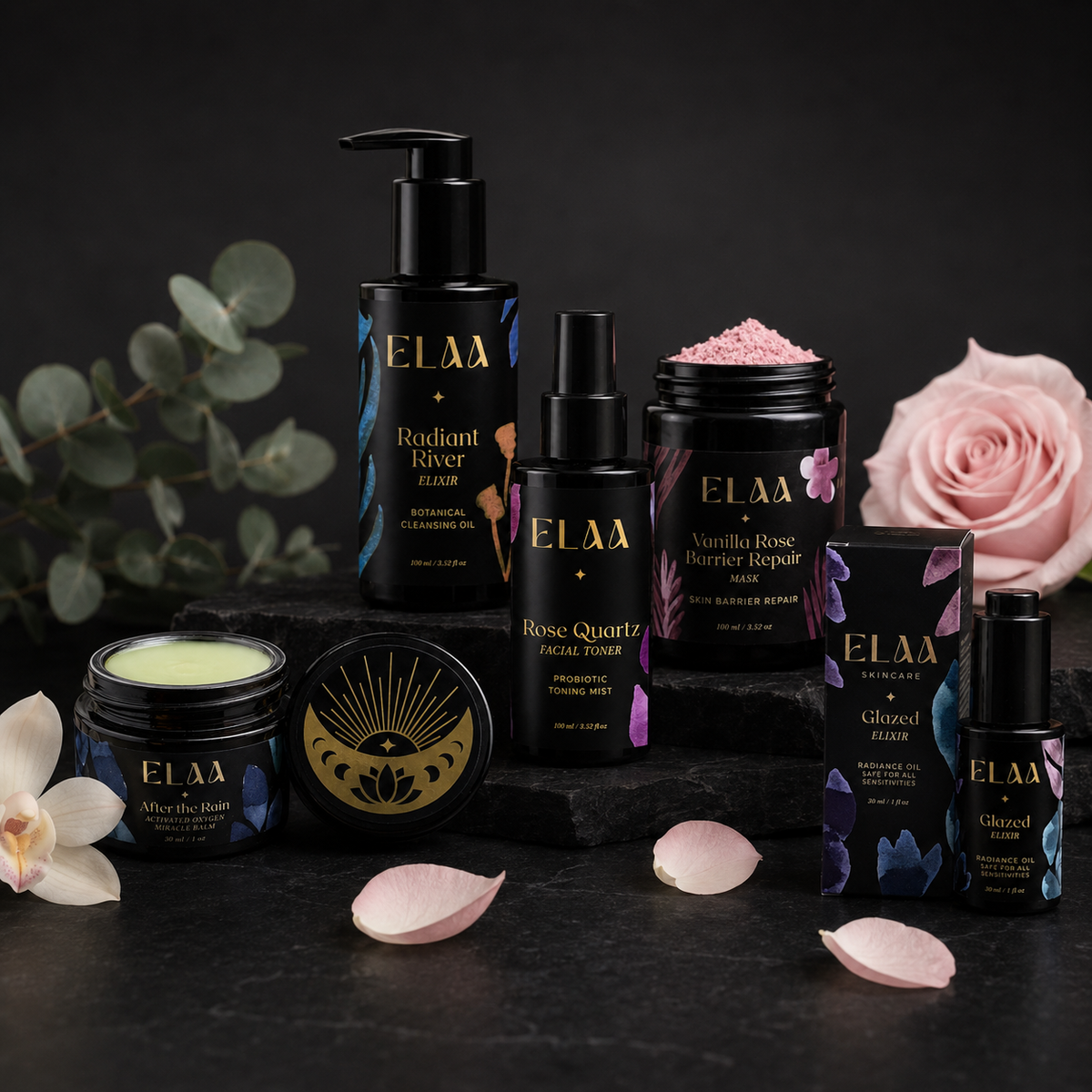
Radiant River Botanical Cleansing Oil is Elaa’s preferred cleanser for barrier-compromised skin. Its surfactant-free blend dissolves oil-soluble residue while surrounding the complexion with lightweight botanical oils, squalane, and concentrated plant extracts.
Massage Radiant River gently over dry skin, then remove it completely with a fresh, soft cloth and comfortably warm water. Avoid long, vigorous massage when the skin is highly reactive.
If a second cleanse is needed to remove heavier makeup or remaining oil, use a small amount of Golden Sunrise Cleansing Cream. Because Golden Sunrise contains naturally occurring fruit-enzyme activity and aromatic essential oils, patch test first and pause it temporarily if the barrier is too reactive to tolerate it comfortably.
Read How to Oil Cleanse for complete cleansing and removal instructions.
4. Replenish Water-Based Hydration
A facial oil or balm helps reduce moisture loss, but it does not replace water-based hydration.
After cleansing, mist the complexion generously with Rose Quartz Probiotic Toning Mist.
Rose Quartz combines artisan-distilled rose hydrosol with a Lactobacillus ferment lysate. It lightly hydrates, refreshes, and prepares damp skin for the oils, balms, or moisturizers that follow.
Leave the final mist on the skin. Apply the next product while the complexion remains lightly damp so that the finishing oil or balm can help seal in that hydration.
5. Replenish Lipids and Seal In Moisture
The barrier naturally relies upon lipids, including ceramides, cholesterol, and fatty acids. Botanical oils and emollients can help replace the feeling of softness and flexibility when the skin is dry or depleted.
Glazed Elixir is an essential-oil-free facial oil formulated with lightweight botanical oils, concentrated CO2 extracts, olive squalane, bakuchiol, astaxanthin, and vitamin E.
It helps:
- Replenish skin-softening lipids
- Seal in water-based hydration
- Support the skin’s moisture barrier
- Comfort dry, depleted, or visibly stressed-looking skin
- Improve the appearance of softness and suppleness
- Create a smooth, luminous finish
Warm one to three drops between clean fingertips and press them gently over lightly damp skin. Begin with the smallest amount and add more only if needed.
Although Glazed is essential-oil-free, a highly reactive complexion should still be patch tested. When the skin is acutely irritated, begin with the simplest routine and introduce more complex formulas gradually.
6. Use Concentrated Activated-Oxygen Care
After The Rain — Sensitive is the concentrated treatment within the Elaa barrier ritual.
It contains only cold-process, fully ozonated organic extra-virgin olive oil, without essential oils or added fragrance.
During extended ozonation, olive oil is transformed into a dense gel rich in oxygen-derived compounds. Published studies on specific ozonated-oil preparations have reported support for epithelial healing and tissue-repair processes.
Within a daily skincare ritual, After The Rain — Sensitive helps:
- Replenish concentrated moisture
- Cushion dry, delicate, or visibly stressed areas
- Comfort the appearance of redness and irritation
- Support the skin’s natural renewal processes
- Promote a softer and more resilient-looking moisture barrier
- Improve the appearance of dry, rough, or damaged-looking texture
After The Rain is extremely concentrated. Begin with a patch test and use only a tiny dab.
Warm the balm between clean fingertips and press it gently over the areas that need additional care. Avoid vigorous rubbing.
Many people prefer to use After The Rain at night, either alone after misting or over selected areas as the final step of a simplified routine.
7. Add a Moisture-Binding Mask
Vanilla Rose Skin Barrier Repair Mask is a waterless powder mask that transforms into a silky veil when blended with warm water or an Elaa hydrosol.
Its formula brings together raw honey, aloe vera, coconut milk, olive squalane, niacinamide, rice-bran-derived ceramides, acai sterols, snow mushroom, cloudberry, rosehip CO2, argan oil, probiotics, mushrooms, fruits, and flowers.
These ingredients help:
- Bind water at the skin’s surface
- Reduce the feeling of dryness and tightness
- Support moisture retention
- Replenish dry, delicate, or depleted-looking skin
- Promote a soft, supple, comfortable complexion
- Support the appearance of a healthier moisture barrier
Vanilla Rose is essential-oil-free and contains no added fragrance.
To prepare it, place approximately one tablespoon of powder into a clean, dry dish. Add approximately half as much comfortably warm water or Rose Quartz mist and mix until a silky texture forms.
If natural honey crystals create small clumps, allow the mixed mask to rest for five to ten minutes, then stir again before applying.
Smooth the mask over the face and neck using light, long strokes. Once an area has been covered, avoid repeatedly moving over it because the natural humectants and gelling ingredients begin forming a flexible film.
Leave it on for approximately 20 minutes, or longer when the skin remains comfortable. Remove gently with a soft cloth and warm—never hot—water.
Vanilla Rose may be used weekly, several times per week, or more often according to the skin’s needs and tolerance. Do not use it if you have a known allergy or sensitivity to honey or other bee-derived ingredients.
8. Reintroduce Exfoliation Carefully
When the complexion is raw, burning, persistently stinging, or visibly flaking, pause exfoliation.
There is no universal number of days or weeks that every person must wait. Resume only when:
- Cleansing no longer causes tightness or burning
- Familiar gentle products no longer sting
- Visible flaking has substantially settled
- The skin feels comfortable between applications
- Redness and reactivity are no longer increasing
When the barrier feels stable, begin no more than once weekly with a gentle treatment such as Royal Radiance Dust.
Mix a small amount with liquid and use minimal pressure. Do not treat the cleansing cloth, mask removal, polishing powder, and another exfoliant as separate exfoliating opportunities within the same ritual.
Highly concentrated acid treatments should be reintroduced later and one at a time, only when the skin has regained comfort and resilience.
9. Support the Skin from Within
The moisture barrier is topical, but skin health is also supported by the condition of the whole body.
Foundational support includes:
- A whole-food diet rich in colorful, nutrient-dense foods
- Adequate protein for skin structure and renewal
- Healthy fats, including sources of omega-3 fatty acids
- Vitamins and minerals involved in normal skin function
- Appropriate hydration
- Healthy digestion and nutrient absorption
- Consistent sleep
- Regular gentle movement
- Stress support and nervous-system regulation
- Reducing unnecessary environmental and topical irritants
No single food or supplement repairs every damaged skin barrier. The goal is to provide the body with the nourishment and rhythm it needs to support normal renewal.
Barrier-Supporting Ingredients to Look For
Ceramides
Ceramides are naturally occurring lipids that help maintain the structure and water resistance of the stratum corneum.
Topically applied ceramides can support moisture retention, reduce the feeling of dryness, and help replenish a barrier that has become depleted.
Vanilla Rose contains rice-bran-derived glycosphingolipids selected for their ceramide-rich, barrier-supporting properties.
Fatty Acids and Botanical Oils
Fatty acids help condition the skin and support the lipid-rich environment of the barrier.
Jojoba, squalane, argan, rosehip, raspberry, pomegranate, cloudberry, and other thoughtfully selected botanical oils help replenish softness and reduce moisture loss.
Humectants and Botanical Polysaccharides
Humectants attract and bind water at the skin’s surface.
Elaa favors botanical moisture-binding ingredients such as aloe vera, raw honey, snow mushroom, acacia fiber, glycerin, and Cassia angustifolia polysaccharides.
These ingredients help the stratum corneum remain soft and flexible rather than dry and brittle.
Raw Honey
Raw honey is naturally humectant, meaning that it attracts and retains water.
Within Vanilla Rose, it helps create a soft, flexible veil over the complexion while supporting hydration, comfort, and a well-conditioned moisture barrier.
Acai Sterols
Acai fruit sterols help bind water and support a cushiony, emollient feel. They complement ceramides and botanical oils within formulas created for dry or depleted skin.
Olive-Derived Squalane
Squalane is a lightweight, stable emollient that helps soften the skin and reduce moisture loss without an excessively heavy feel.
Niacinamide
Niacinamide is a form of vitamin B3 valued in skincare for supporting barrier function, more even-looking tone, moisture retention, and a balanced appearance.
Even beneficial ingredients can sting when the barrier is acutely disrupted, so introduce them gradually and observe individual tolerance.
Probiotic and Ferment Ingredients
Probiotic-derived and ferment ingredients are used in skincare to support conditioning, hydration, and a balanced-looking surface environment.
Rose Quartz contains Lactobacillus ferment lysate, while Vanilla Rose contains a broad probiotic blend within its waterless powder composition.
Antioxidant Botanicals
Rose, cloudberry, rosehip, argan, mushrooms, astaxanthin, pomegranate, raspberry, and other antioxidant-rich botanicals help condition the complexion and protect against the visible effects of everyday environmental stress.
Recommended Elaa Products for Skin Barrier Repair
Cleanser: Radiant River Botanical Cleansing Oil
Radiant River dissolves makeup, sunscreen, excess sebum, and oil-soluble residue without foaming or leaving the complexion with a harsh after-feel.
Toner: Rose Quartz Probiotic Toning Mist
Rose Quartz replenishes lightweight water-based hydration with artisan rose hydrosol and probiotic-derived care.
Moisture: Glazed Elixir
Glazed Elixir provides essential-oil-free botanical lipids, squalane, bakuchiol, astaxanthin, and concentrated CO2 extracts to support a soft, supple, luminous complexion.
Concentrated Treatment: After The Rain — Sensitive
After The Rain — Sensitive provides exceptionally concentrated fully ozonated olive oil for dry, reactive, or visibly stressed areas.
Mask: Vanilla Rose Skin Barrier Repair Mask
Vanilla Rose combines ceramides, sterols, raw honey, snow mushroom, botanical oils, probiotics, and antioxidant-rich plants in a freshly activated moisture-binding mask.
Exfoliant After the Barrier Is Stable: Royal Radiance Dust
Royal Radiance Dust can be introduced gently once the complexion no longer feels raw, burning, persistently tight, or unusually reactive.
The Elaa Barrier Ritual
Morning
- Cleanse lightly only when needed.
- Mist generously with Rose Quartz.
- While the skin remains damp, press in one to three drops of Glazed Elixir.
- Finish with a tiny amount of After The Rain — Sensitive wherever additional cushioning is needed.
Evening
- Cleanse gently with Radiant River.
- Remove the cleansing oil completely with a soft cloth and warm water.
- Mist with Rose Quartz and leave the skin lightly damp.
- Apply Glazed Elixir or After The Rain — Sensitive according to the skin’s needs.
- Keep the ritual simple rather than layering every product at once.
Mask Ritual
Prepare Vanilla Rose with warm water or Rose Quartz and apply it one to three times per week—or more often when it remains comfortable and the skin benefits from the added moisture.
On mask evenings, there is no need to use an exfoliant or several active serums.
When the Skin Is Extremely Reactive
Begin with the fewest possible steps:
- Cleanse only when needed with Radiant River.
- Mist with Rose Quartz if it feels comfortable.
- Apply a tiny amount of After The Rain — Sensitive.
Introduce Glazed Elixir and Vanilla Rose one at a time after the skin has settled.
Frequently Asked Questions
How Long Does It Take to Repair a Damaged Skin Barrier?
There is no single recovery timeline.
A mildly over-cleansed or over-exfoliated complexion may begin to feel more comfortable within several days after the trigger is removed. More significant or repeated damage can require several weeks or longer.
Recovery time depends upon:
- The degree of disruption
- Whether the original trigger has been removed
- The products still being used
- The person’s underlying skin tendencies
- Climate and environmental exposure
- Overall nourishment, sleep, stress, and health
Use the condition of the skin—not a predetermined calendar—to decide when to reintroduce exfoliation or strong active products.
Can a Damaged Skin Barrier Contribute to Acne?
A compromised barrier can coexist with acne-prone skin and may contribute to visible redness, sensitivity, inflammation, dryness, and difficulty tolerating products.
Barrier damage is not the only possible cause of acne, but repeatedly stripping or irritating acne-prone skin can make the overall complexion more difficult to balance.
Can Oily Skin Have a Damaged Barrier?
Yes. Oil and water are not the same thing.
A complexion can produce abundant sebum while losing too much water through a compromised barrier. This can create skin that looks shiny but still feels tight, flaky, or dehydrated.
Should I Stop Exfoliating?
Pause exfoliation when the skin is burning, raw, persistently stinging, actively flaking, or unusually reactive.
Once the complexion feels calm and comfortable, reintroduce one gentle exfoliant no more than once weekly. Do not resume several acids, scrubs, enzymes, and peels at the same time.
Can I Have a Peel, Microneedling, or Another Intensive Treatment?
Avoid intensive resurfacing treatments while the barrier is visibly compromised. Adding more controlled injury to skin that has not recovered can prolong redness, sensitivity, and discomfort.
Wait until the complexion feels stable and follow the guidance of an experienced professional you trust.
Should I Stop Every Serum?
Not necessarily, but simplifying is helpful.
Pause products that burn, sting, peel, or leave the complexion increasingly reactive. Continue only the simplest formulas that remain consistently comfortable.
Reintroduce additional serums one at a time so the skin’s response is easy to identify.
Is Tingling a Sign That a Product Is Working?
Not necessarily.
A brief mild sensation may occur with some active ingredients, but burning, escalating discomfort, persistent redness, or swelling is not required for a product to be effective.
A barrier-repair ritual should become increasingly comfortable over time, not progressively more painful.
Do I Need a Complicated Ten-Step Ritual?
No. A gentle cleanser, water-based mist, and well-tolerated oil or balm may be enough while the barrier is recovering.
Additional products can be added slowly after the complexion regains comfort and resilience.
Can I Use Facial Oils on a Damaged Skin Barrier?
Facial oils can help replenish emollient lipids and reduce moisture loss. Apply them over lightly damp skin so they seal in water-based hydration rather than being used as the only source of moisture.
Choose a formula that suits the individual complexion and begin with a small amount.
Can I Use After The Rain Every Day?
Many people use After The Rain regularly, but the appropriate frequency and amount depend upon the skin.
Begin with a patch test and a tiny dab. Highly reactive skin may prefer application every few days at first before gradually increasing frequency.
Can Vanilla Rose Be Used Daily?
Vanilla Rose may be used weekly, several times per week, or daily when the skin tolerates and benefits from it.
Prepare each application freshly, use only a clean, dry utensil, and never return an activated mixture to the original container.
When Should I Seek Additional Support?
Seek guidance from an appropriately qualified practitioner when the skin is severely painful, swollen, blistered, weeping, bleeding, crusting, showing signs of infection, rapidly worsening, or not improving after the suspected trigger has been removed.
Explore the Complete Elaa Barrier Ritual
The Skin Barrier Repair collection brings together gentle cleansing, water-based hydration, activated oxygen, botanical oils, ceramides, sterols, raw honey, snow mushroom, and other moisture-supporting ingredients.
For a curated set, The Skin Barrier Repair Collection includes Radiant River, Rose Quartz, After The Rain — Sensitive, Vanilla Rose, and a full-size Glazed Elixir.
For a guided starting point, take the Find Your Ritual questionnaire. For personalized product selection and ritual guidance, explore Skin & Beauty Consulting with Elaa.